1. Your history, reviewed properly. Your North Carolina-licensed clinician goes through your health background, every medicine you take, your weight history, your blood pressure and blood sugar if you have them, and your personal and family thyroid history.
Telehealth Weight Loss in North Carolina
Start with your $99 consultation ↗Upgraded Health MGMT is a telehealth practice. Services are available only in states where our clinicians are licensed. Medication is prescribed only after a medical consultation. Individual results vary. Medication may carry risks and side effects. This page is for informational purposes and is not a substitute for in-person medical advice.
Who we treat in North Carolina
In 2024, 34.5% of North Carolina adults reported having obesity (CDC Behavioral Risk Factor Surveillance System, 2024).
We serve adults across North Carolina with telehealth weight loss. You meet with a clinician licensed in North Carolina, by video or secure message. If they decide medication is appropriate, the prescription goes to a licensed pharmacy and the medication is shipped to your North Carolina address.
This is the same program we run in every state we serve. You can read how the whole thing works in our telehealth weight loss program before you decide.
North Carolina suits telehealth for some practical reasons. Specialist access is uneven: the western counties and much of eastern rural North Carolina are a long drive from a major hospital, and the Charlotte and Raleigh metros run on schedules that make a half-day appointment hard to fit. If you have been searching for a weight loss clinic in North Carolina, or for medical weight loss near me in North Carolina, and you want care that does not require an office visit, this is the option.
Every package in this program carries the same aim: focus on getting beyond the scale to a place where you feel good physically, emotionally and mentally for the long-term.
Who qualifies
The usual criteria apply in North Carolina:
18 or older
A body mass index (BMI) of 30 or higher, or a BMI of 27 or higher with at least one weight-related condition such as type 2 diabetes, high blood pressure, high cholesterol, or obstructive sleep apnea
Living in North Carolina at the time of your visit
No contraindications, including a personal or family history of medullary thyroid carcinoma (MTC) or Multiple Endocrine Neoplasia syndrome type 2 (MEN 2), and no pregnancy or breastfeeding
Your clinician confirms eligibility during the consultation, not before it. Somebody with your history needs to look at it before anyone writes a prescription.
What the consultation involves
Your first appointment costs $99, one time. It is a one-on-one visit with a licensed medical provider to discuss your health goals and personalized treatment options. It is a paid appointment, and there is no separate eligibility step that leads to a prescription.
Here is what happens in it:
2. A real decision. They decide whether medication is appropriate. If it is not, they explain why and what else may help.
3. The practical stuff. Side effects, how your dose is managed, what to eat when your appetite drops, what to do if a dose makes you sick, what it costs, and what is included.
4. A plan in writing. You leave with the plan and the cost, and you can read it again.
After that, your clinician sends the prescription to a pharmacy that compounds the medication. It arrives with the supplies you need and instructions for the weekly injection. You check in monthly from then on, and your clinician adjusts your dose based on how you are doing.
Start with your $99 consultation ↗What it costs in North Carolina
The consultation: $99, one-time, and separate from any medication plan
Weight Management Monthly Plan – Semaglutide: $299 per month
Weight Management Monthly Plan – Tirzepatide: $499 per month
Weight Management 3 Month Plan – Semaglutide: $725 for 3 months
Weight Management 3 Month Plan – Tirzepatide: $1,099 for 3 months
The consultation is a one-on-one visit with a licensed medical provider to discuss your health goals and personalized treatment options. It comes first, and it is separate from your plan.
The cost of medicine is included in the price shown, so your total is the consultation plus your plan.
The monthly plans are a monthly subscription with month-to-month support. The next payment is deducted one month after you start.
The 3-month plans give you consistent care and month-to-month support. They are billed every 12 weeks, so there is no lapse in your medication. They cover three months of medication, good for 13 weeks, which gives you one extra week in the program. Doses can vary in most cases. The next payment is deducted three months after you start.
On the monthly tirzepatide plan, 12.5 mg and above is $650.
We are cash-pay. We do not bill insurance and we do not submit claims on your behalf. HSA and FSA funds can be used for payment. If you want to send a receipt to your insurer yourself, ask for an invoice and we will provide one, but we cannot promise any reimbursement.
North Carolina Medicaid reinstated coverage for GLP-1 medicines used to treat obesity, effective 12 December 2025, and it also covers GLP-1 medicines for diabetes and other approved indications (NC Medicaid bulletin, 19 December 2025). That coverage applies to FDA-approved products on the state’s preferred drug list, with prior authorization and clinical criteria attached, and a preferred product has to be tried first, or there has to be a documented reason it cannot be used, before a non-preferred product is approved. Medicaid does not cover our compounded medication. We do not bill Medicaid, we do not dispense branded products, and we cannot tell you whether you qualify. Check with your plan for where you stand.
North Carolina rules that affect your care
The North Carolina Medical Board treats telemedicine as a normal way to practise medicine, with the same standard of care as in-person care. Its position statement on telemedicine sets out the parts that matter to you:
Your clinician must be licensed in North Carolina. The Board treats the practice of medicine as taking place where the patient is located, so anyone treating a North Carolina patient needs a North Carolina license.
A prior in-person meeting is not required. A licensee-patient relationship can be established through synchronous or asynchronous telemedicine, without a prior in-person meeting, as long as the standard of care is met.
An appropriate evaluation is required before diagnosis or treatment. The evaluation does not have to be in person if the technology used gives the clinician the same information an in-person exam would.
Informed consent should be documented. Consent acknowledging the risks, limits, alternatives, and benefits of telemedicine belongs in your record.
Referral when telehealth is not enough. If your situation needs an in-person physical exam, a diagnostic procedure, a lab test, or imaging, your clinician refers you for in-person care.
That last point is the honest limit of telehealth weight loss. It works well for the population we serve. It is not the right tool for everything, and if you need hands-on care, we will say so and refer you.
The medication we prescribe in North Carolina
We prescribe two compounded GLP-1s and nothing else:

Compounded semaglutide in North Carolina
A GLP-1 receptor agonist that slows how quickly food leaves your stomach and reduces hunger signals.
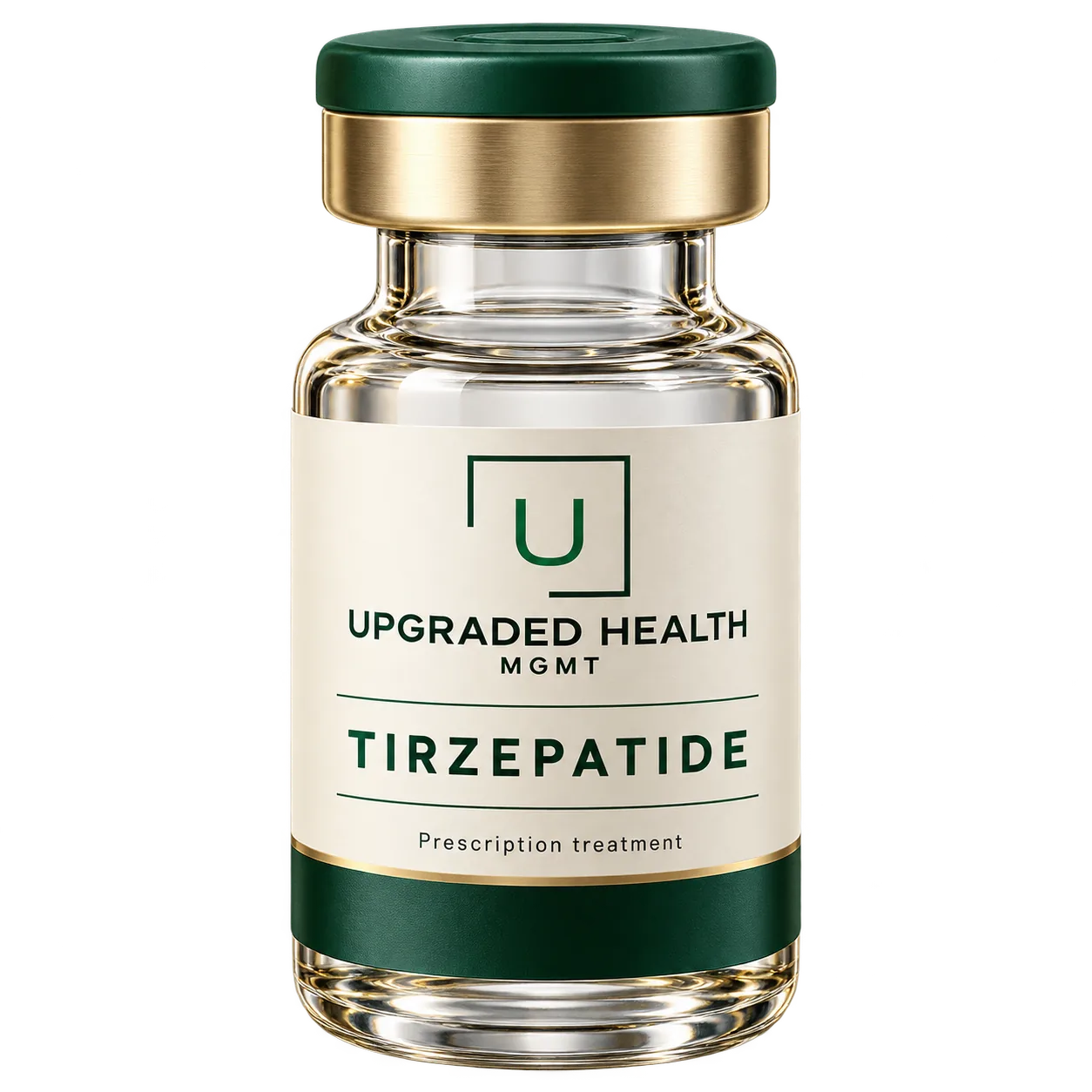
Compounded tirzepatide in North Carolina
A dual GIP/GLP-1 receptor agonist that acts on two gut hormone signals at once.
Both are once-weekly injections. If you have been searching for semaglutide near me in North Carolina, or for tirzepatide near me in North Carolina, or for weight loss injections in North Carolina, this is the service: a North Carolina-licensed clinician, a licensed pharmacy, and delivery to your door.
⚠️ WARNING: Semaglutide and tirzepatide carry an FDA boxed warning for thyroid C-cell tumors. Do not use them if you or a family member has a history of medullary thyroid carcinoma (MTC) or Multiple Endocrine Neoplasia syndrome type 2 (MEN 2). Your clinician will ask about your personal and family thyroid history before prescribing.
Compounded medication is not approved by the FDA. The FDA has approved branded versions of semaglutide and tirzepatide for chronic weight management, and the clinical trials were run on those branded products. We do not claim our compounded medication produces the same results and we do not describe it as equivalent to any brand.
Nutrition and exercise in North Carolina

Medication does the part that is hardest to do on your own. It does not do the rest.
A GLP-1 lowers appetite, so eating gets easier for a while. It also makes it easy to under-eat without noticing, and under-eating costs you muscle, energy, and nutrients. So we talk about protein, fiber, and hydration at every check-in. Activity does not have to be dramatic. It has to be something you keep doing on a bad week.
We will say this plainly because it is the point: people who pair medication with a diet they can sustain and with regular movement do better than people who rely on the injection alone. A program that tells you diet and exercise are unnecessary is telling you something false. We cover the day-to-day side of this at your check-ins.
Last verified and review cadence
We keep this page checked against North Carolina’s guidance, and we update it when something changes.
FAQ
Do I need an in-person visit to start in North Carolina?
No. The North Carolina Medical Board treats telemedicine as a standard way to practise, and a licensee-patient relationship can be established remotely without a prior in-person meeting, as long as the standard of care is met.
How much does the consultation cost in North Carolina?
$99, one-time. It is a separate charge, and you pay it on top of your medication plan. It is a one-on-one visit with a licensed medical provider to discuss your health goals and personalized treatment options.
How much does weight loss medication cost in North Carolina?
Four medication packages, billed separately from the $99 consultation:
Weight Management Monthly Plan – Semaglutide: $299 per month
Weight Management Monthly Plan – Tirzepatide: $499 per month
Weight Management 3 Month Plan – Semaglutide: $725 for 3 months
Weight Management 3 Month Plan – Tirzepatide: $1,099 for 3 months
The cost of medicine is included in the price shown. On the monthly tirzepatide plan, 12.5 mg and above is $650.
Can I use my HSA or FSA?
Yes. HSA and FSA funds can be used for payment. Your plan administrator decides what your account covers.
Do you accept insurance?
No. We are cash-pay. We do not bill insurance, and we cannot promise any reimbursement if you submit a receipt yourself.
Does North Carolina Medicaid cover weight loss medication?
North Carolina Medicaid reinstated coverage for GLP-1 medicines used to treat obesity effective 12 December 2025, and it covers GLP-1 medicines for diabetes and other approved indications (NC Medicaid bulletin, 19 December 2025). That applies to FDA-approved products on the state’s preferred drug list, with prior authorization and clinical criteria attached, and a preferred product has to be tried first, or there has to be a documented reason it cannot be used, before a non-preferred product is approved. Medicaid does not cover our compounded medication. We do not bill Medicaid and we do not dispense branded products. Check with NC Medicaid for your own situation.
Who can prescribe weight loss medication in North Carolina?
A clinician licensed in North Carolina. The North Carolina Medical Board requires it, because the practice of medicine is deemed to occur where the patient is located.
How quickly will I lose weight on medication?
We will not give you a number. Clinical trials of the branded products showed average losses of 14.9% of body weight over 68 weeks for semaglutide and 20.9% over 72 weeks for tirzepatide. Your own result depends on the medicine, your dose, your starting point, and how you eat and move while you are on it.
What are the side effects?
Nausea, vomiting, diarrhea, and constipation are the common ones, mostly during dose increases, and they usually settle. Pancreatitis, gallbladder disease, kidney injury from dehydration, and severe stomach problems are less common and more serious. Your clinician reviews your history and covers the risks with you before prescribing.
If you want to see the whole program and what it costs before you book, read our telehealth weight loss program.